
Acrylic Art: Versatile Brilliance in Modern Creativity

Acrylic, a material once confined to industrial applications, has emerged as a cornerstone of contemporary art. Its translucency, durability, and adaptability make it a favorite among artists pushing the boundaries of mixed media, sculpture, and functional design. Below, we delve into acrylic’s rise as a symbol of modern artistry, its unique advantages, and a comparative analysis against traditional materials.
Why Acrylic is the Artist’s Secret Weapon
1. Unmatched Optical Clarity
Acrylic (polymethyl methacrylate, or PMMA) offers 92% light transmittance, rivaling glass but without the fragility. Its crystal-clear surface enhances vibrant colors, making it ideal for backlit installations or layered artworks.
2. Lightweight & Durable
Weighing half as much as glass and resistant to shattering, acrylic is perfect for large-scale installations or outdoor sculptures. It withstands UV rays, moisture, and temperature fluctuations, ensuring longevity.
3. Machinability
Acrylic can be laser-cut, thermoformed, engraved, or polished, allowing artists to experiment with textures and dimensions.
4. Sustainability
Many acrylic sheets are recyclable, appealing to eco-conscious creators.
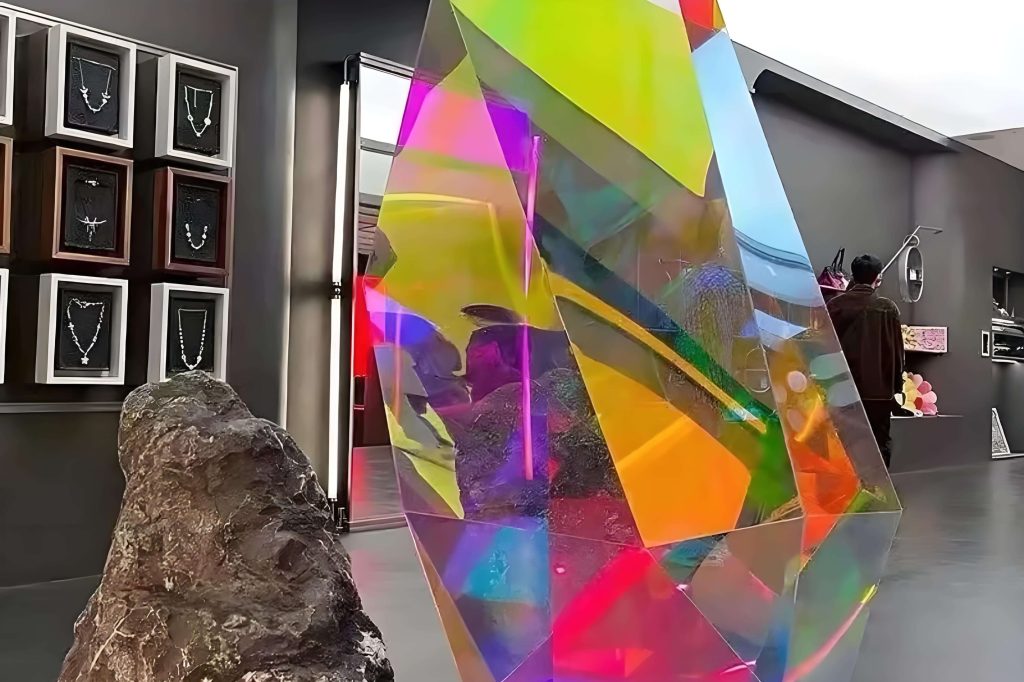
Applications of Acrylic in Art
1. Sculptures & 3D Art
Artists like Bruce Beasley and Debra Baxter use cast acrylic to carve geometric forms that play with light and shadow.
2. Mixed Media & Paintings
Acrylic sheets serve as unconventional canvases. When layered with resin, ink, or metal leaf, they create mesmerizing depth.
3. Functional Art
- Furniture: Tables, lamps, and shelves with embedded LEDs.
- Architectural Elements: Room dividers or wall panels with laser-etched patterns.
4. Interactive Installations
Reflective or translucent acrylic is used in immersive exhibits, such as TeamLab’s digital-art spaces.
Acrylic vs. Traditional Art Materials: A Comparative Guide
| Property | Acrylic | Glass | Wood | Metal |
|---|---|---|---|---|
| Weight | Light (1.19 g/cm³) | Heavy (2.5 g/cm³) | Variable | Very Heavy (e.g., steel: 7.9 g/cm³) |
| Durability | Shatter-resistant | Fragile | Prone to warping/rot | Corrosion-resistant |
| Workability | Easy to cut, bend, engrave | Requires specialized tools | Requires carving tools | Welding/machining needed |
| Cost | Moderate | High (for tempered glass) | Low to Moderate | High |
| Aesthetic Flexibility | High (colors, textures) | Limited | Natural grain | Industrial finish |
Creating with Acrylic: Tips from Professional Artists
1.Choosing the Right Type
Cast Acrylic: Ideal for carving and precision work (superior clarity).
Extruded Acrylic: Budget-friendly for flat cuts and simple designs.
Cell-Cast Colored Acrylic: Offers rich, uniform hues for bold artistic statements.
2. Tools & Techniques
Cutting: Use a laser cutter or scoring tool for clean edges.
Bonding: Opt for solvent-based adhesives (e.g., Weld-On 4) for invisible seams.
Finishing: Polish edges with a flame torch or sandpaper (up to 2000 grit).
3. Preservation
Avoid ammonia-based cleaners; use microfiber cloths.
Store vertically to prevent scratching.
The Future of Acrylic Art
Innovations like smart acrylic (embedded LEDs) and bio-based PMMA are pushing the medium further. Meanwhile, digital artists combine CNC machining with acrylic to blur the lines between physical and virtual art.
Acrylic’s versatility and resilience have cemented its role in modern art, offering endless possibilities for creators. Whether you’re crafting a minimalist sculpture or a glowing architectural centerpiece, acrylic empowers artists to redefine boundaries. As technology evolves, this material will undoubtedly remain at the forefront of artistic innovation.

